

.png?width=2000&name=The%20Definitive%20Guide%20to%20Bluetooth%20Tracking%20Whitepaper%20Image%20(2).png)

What is Bluetooth asset tracking?
Bluetooth asset tracking is a way of making physical objects visible to cloud systems. A small wireless device, known as a Tag, is attached to an asset. The Tag broadcasts a signal using Bluetooth Low Energy (LE), which can be picked up by nearby devices such as smartphones, handheld scanners or fixed gateways. When a device detects a Tag, it forwards that sighting to the cloud, where it is recorded, processed and made available to the systems an organisation already uses.
A Bluetooth tracking system captures three types of information. Identity answers "what is it?", with each Tag carrying a unique identifier tied to a specific asset. Location answers "where is it?", recorded from the device that detected the Tag and where that device was at the time. Condition answers "what state is it in?", as Tags equipped with sensors can report temperature, humidity, motion or shock, providing a continuous picture of the environment an asset has experienced.
What makes Bluetooth distinctive as an asset tracking solution is the combination of low cost, low power and the sheer number of devices already capable of receiving BLE signals. There is no requirement for proprietary readers or specialist infrastructure. The devices that frontline teams already carry as part of their daily work can serve as the detection layer. Bluetooth support is built into every major operating system and billions of devices worldwide.
For a detailed look at how Bluetooth beacons work at the protocol level, including beacon formats, broadcast mechanics and signal behaviour, see the companion guide The Definitive Guide to Bluetooth Beacons.
This page focuses on the system: how Tags, networks and asset tracking software come together as an asset tracking solution and where that solution adds value.
Tags
A Tag is a small wireless device attached to an asset. It broadcasts a Bluetooth signal carrying a unique, cryptographically secure identifier and where sensors are fitted, readings such as temperature or motion. Tags do not need to pair with the devices that detect them. One Tag can be seen by many devices and one device can handle many Tags at once.
How a Tag's components are combined produces distinct form factors. Classic Tags are compact and robust, with coin cell batteries that give operational lifetimes suited to assets that cycle through an operation over months or years. Micro Tags are smaller and lower cost, with a peel-and-stick attachment designed for high-volume deployments where cost per Tag matters. Label Tags are thin, flexible devices powered by printed batteries, designed for single-trip tracking and disposed of with the packaging. For a deeper look at this form factor, see the companion guide The Definitive Guide to BLE Smart Labels.
Not every Tag carries sensors, but the trend is towards condition monitoring becoming standard. Temperature sensors serve cold chain and pharmaceutical logistics. Accelerometers detect motion, orientation and shock. Tags that log sensor data onboard and upload the complete profile when they next connect provide a continuous record of what an asset experienced, even when it was out of network coverage for the entire journey.
.png?width=1104&height=1066&name=Blecon%20Asset%20Tracking%20Tags%20-%20Classic%2c%20micro%2c%20ble%20smart%20label%20(5).png)
The Network
The network is the layer that detects Tags and delivers their data to the cloud. How the network is designed determines where Tags can be heard, how often they are heard and how reliably that data reaches the cloud.
Fixed gateways installed at known locations provide continuous coverage in the areas they serve. A set of gateways across a warehouse floor can provide zone-level positioning for everything inside. The constraint is that coverage stops where the infrastructure stops.
A different approach uses the devices that frontline teams already carry as the network. With Blecon Agent software installed, each phone, tablet or handheld scanner becomes a mobile receiver, capturing Tag signals as workers move through their normal routines and forwarding them to the cloud. Coverage is not planned and installed in advance but builds naturally from the routes people already walk and the places they already go.
The two approaches are complementary. Fixed gateways, such as Blecon Hubs, provide continuous coverage in high-priority or low-traffic areas. Mobile devices extend visibility into the places fixed infrastructure cannot practically reach.
.png?width=1104&height=1066&name=Blecon%20Agent%20-%20BLE%20Tracking%20Agent%20(1).png)
Asset tracking software
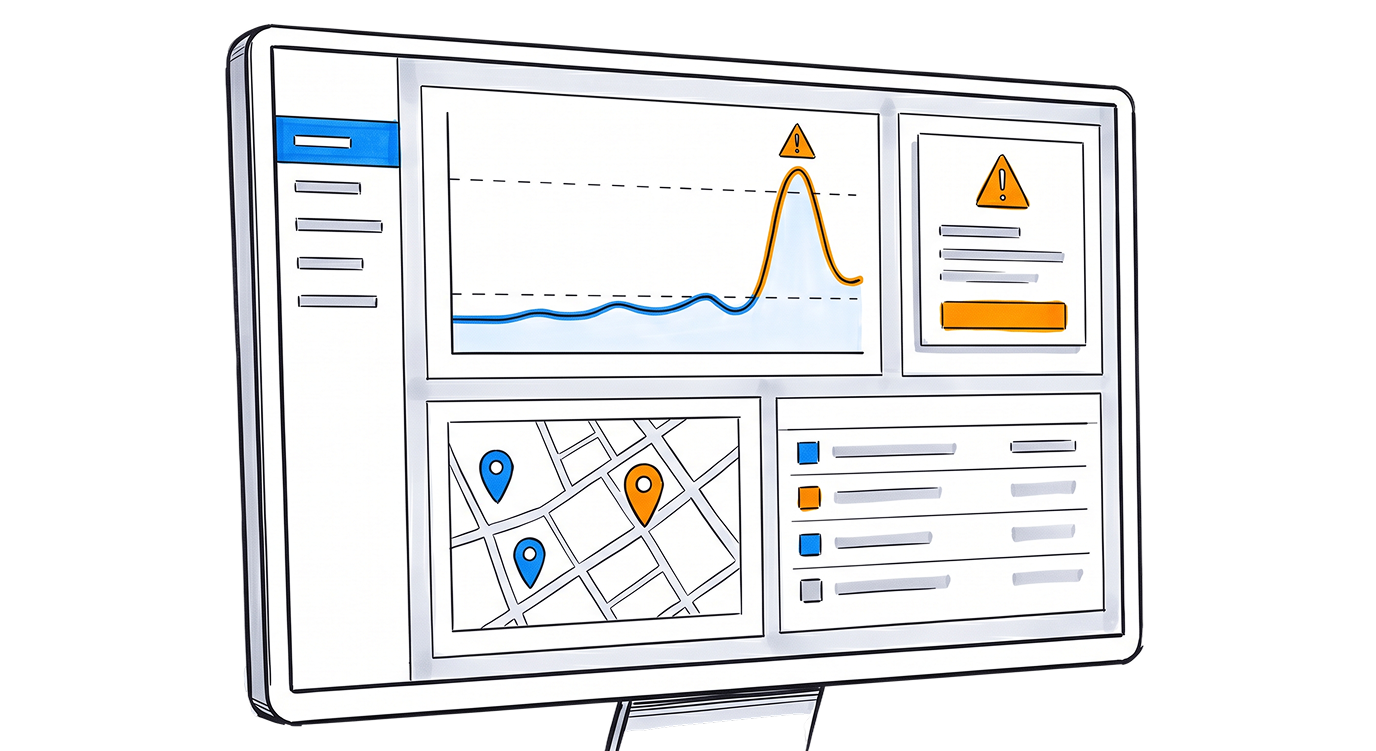
The cloud platform is where it comes together. Asset tracking software such as Blecon Track resolves each Tag detection to the right asset, calculates position, manages zones and rules and delivers dashboards and alerts. It also provides APIs and integrations for feeding tracking data into existing enterprise systems such as WMS, TMS or ERP.
The software is what makes the difference between a stream of Bluetooth signals and an asset tracking system an organisation can use. Configuration determines which events trigger alerts, which zones matter for the operation and which data feeds into downstream systems.
.png?width=1104&height=1065&name=Blecon%20Track%20_%20Journey%20record%2c%20multiple%20temperature%20readings%20plotted%20across%20the%20journey%20(1).png)
Tool and equipment tracking
Specialised tools, diagnostic equipment, safety gear, portable instruments and shared equipment are distributed across teams, vehicles and sites. They are valuable enough to matter when missing but numerous enough that manual tracking is unreliable. The common pattern is a sign-out process that depends on consistent human compliance, which tends to break down under operational pressure. Loss is discovered retrospectively, often long after the window to recover the item has closed.
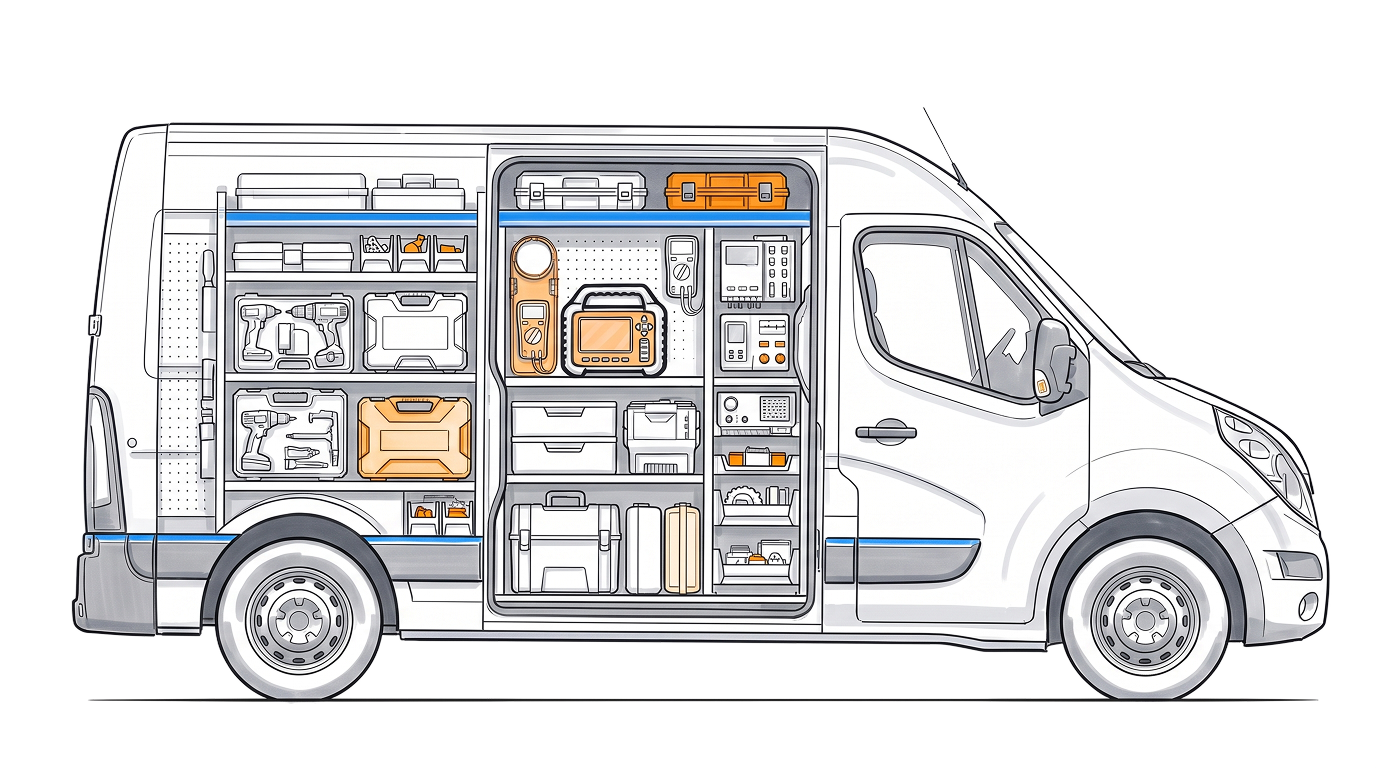
For field-service operations in particular, the challenge is that tools and equipment travel in vehicles that leave the yard each day. A single vehicle can carry a substantial inventory of specialist kit, and once it departs, the ability to verify what is aboard disappears until it returns. Items left at job sites, loaded onto the wrong vehicle or gradually removed from the fleet are found at end-of-day counts or at periodic audits rather than at the point they went missing. The same problem plays out in hospitals where medical devices circulate between departments, in manufacturing where test rigs are shared between lines and in any operation where equipment moves between sites or buildings.
Bluetooth Tags on tools and equipment, detected by the frontline devices already in each vehicle or facility, replace the retrospective count with continuous awareness. The system can associate each tagged item with its assigned location or vehicle and flag a separation as it occurs rather than hours or days later. Because the same Tag can report condition alongside location, tool tracking and equipment tracking are served by a single deployment. The same data builds a longer-term view of utilisation and distribution, identifying where kit sits idle while other teams are short of the same item. See tools and equipment tracking.
Returnable transport items
Roll cages, IBCs, totes, containers and kegs circulate between sites, customers and depots. The volume is high, the individual value is modest and the loss rate is persistent. Most organisations know roughly how many RTIs they own, but far fewer know where those assets are at any given point, how long they dwell at each location or how many cycles each one completes.
The cost of that gap goes beyond the replacement line item. When an operation cannot see its pool clearly, it tends to over-purchase to compensate, holding buffer stock that ties up capital. Locating specific assets when they are needed consumes staff time. Replacement, buffer and search costs compound but they are rarely measured together because the root cause, a lack of continuous visibility across the pool, is treated as a given.
Bluetooth asset tracking makes it practical to maintain visibility across the full RTI cycle. A Tag on each item is detected by frontline devices in the field, recording departure, transit, arrival and dwell without manual scanning. Over time, this builds a picture of utilisation, cycle times and loss patterns that informs purchasing, recovery and allocation. See returnable transport items.
.png?width=1379&height=695&name=A%20warehouse%20worker%20going%20about%20their%20tasks%20with%20a%20rugged%20handheld%20device%20holstered%20on%20their%20belt%2c%20wireless%20signal%20arcs%20passing%20between%20the%20device%20and%20a%20tracking%20tag%20on%20a%20nearby%20roll%20cage.%20(1).png)
Inter-site shipping
When parts, materials or work in progress move between an organisation's own sites, visibility is often fragmented. Each site may track its own inventory, but the transit between sites typically relies on dispatch records and confirmation calls. The shipment is visible at origin and again at destination, but through everything in between it is effectively out of view.
A Bluetooth Tag applied at dispatch makes each shipment independently visible from origin to destination. Label Tags suit one-way moves where the packaging is disposed of at the far end. Longer-life Tags suit items that cycle between sites or wait in storage before they are needed. The tracking platform provides a single view of shipment status across all sites, with rules that surface delays against expected arrival windows. The result is scheduling based on observed position rather than assumed progress. See inter-site shipping.

Cold chain monitoring
Temperature-sensitive goods, whether food, pharmaceuticals, biological materials or chemicals, must remain within defined limits throughout their journey. A breach at any point can render the product unusable, create a compliance failure or introduce a safety risk. The difficulty is that a temperature excursion is not visible by looking at the goods. A compromised consignment arrives looking identical to one that was handled correctly and without a record of conditions during transit, the decision at goods-in is made on incomplete information.
The requirement for condition evidence is increasing. For a growing share of cold chain operations, an unbroken temperature record is becoming a regulatory or contractual obligation rather than a discretionary investment. The standard is shifting from demonstrating that the product is within specification at the point of inspection to proving that the process maintained conditions throughout the journey.
Bluetooth Tags with temperature sensors serve both the operational and the compliance requirement. A logging Tag records and time-stamps temperature data continuously, regardless of coverage and uploads the complete profile when it next connects. A complete logged profile provides the evidence that compliance, insurance and customers increasingly require. See cold chain monitoring.

Download The Definitive Guide to Bluetooth Asset Tracking
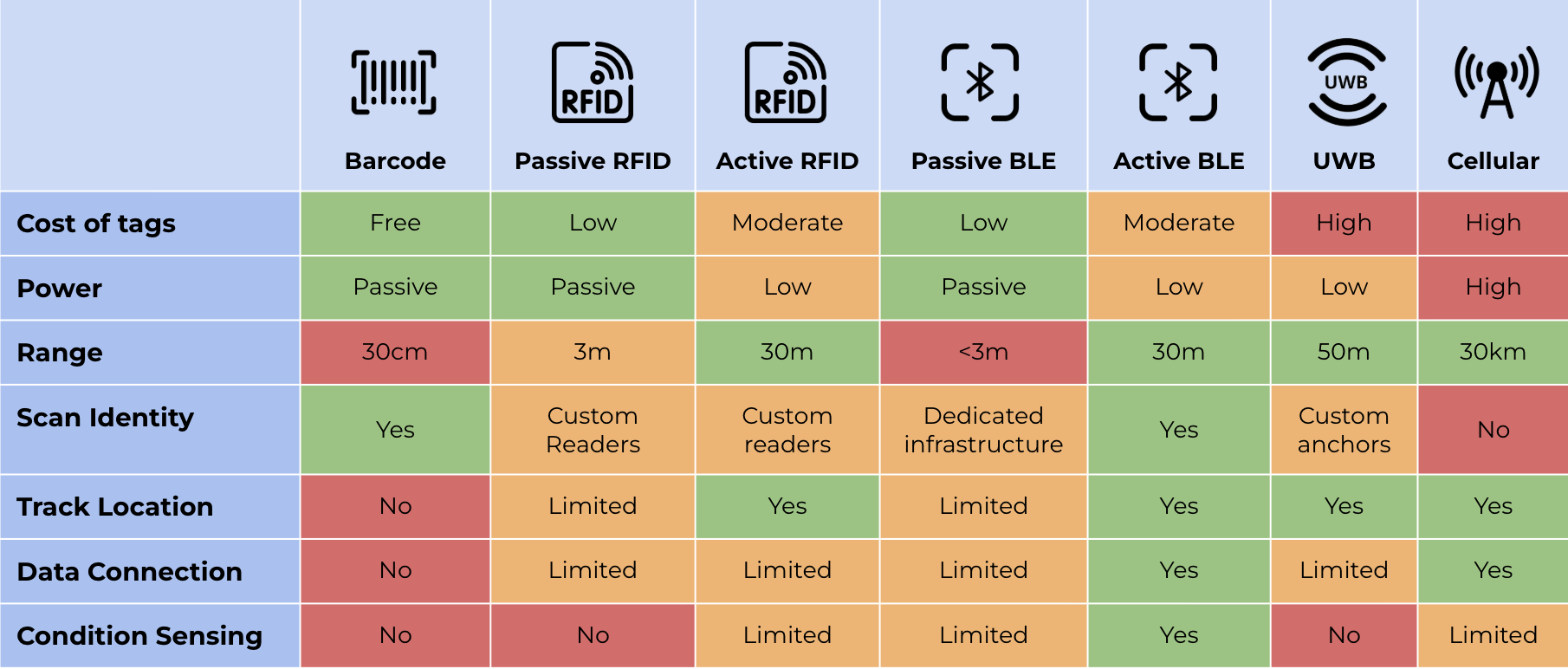
This page covers how Bluetooth asset tracking works and where it adds value. The full guide goes deeper: the anatomy of BLE Tags, how location techniques work and compare, how networks are architected and deployed, how cryptographic identity and security operate, a detailed technology comparison and where the industry is heading next. It is the complete reference for business and technical leaders evaluating an asset tracking system at scale.
.png)
Explore Blecon
Now you know how Bluetooth asset tracking works, here is how Blecon puts it to work. Blecon is an asset tracking system built around a simple principle: the devices your frontline teams already carry can become your tracking network.
Blecon Agent is software that turns frontline phones, tablets and handheld scanners into mobile Hotspots, detecting Tags as people move through their normal work. Blecon Hubs provide fixed coverage at high-priority locations such as receiving docks, cold stores or yard gates. Blecon Track is the cloud platform where it comes together: live location and condition for every tagged asset, zones and rules configured to the operation, alerts that reach the right people and APIs that feed data into existing enterprise systems.
- The L02S-BCN: a logging Tag with temperature, humidity, accelerometer and pressure sensors, for journey logging and condition-critical applications.
- The SH01-BCN: a peel-and-stick Micro Tag with a multi-year lifetime, for cost-sensitive tracking at scale.
- The TL05-BCN: a thin, peel-to-activate Label Tag with a printed battery, for one-way shipments.
